Listening Systems
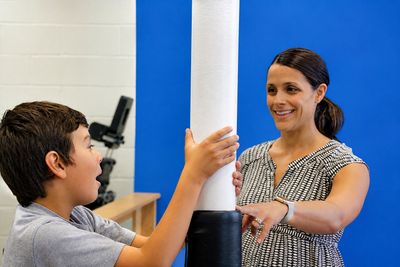
Therapeutic Listening® and Integrated Listening Systems are sound-based interventions used to support the development of a variety of skills.

Occupational Therapy
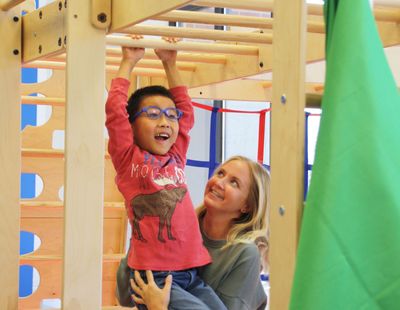
Our occupational therapists use play, movement and the “just right challenge” to help children grow more independent and confident at home, at school and in the community.
How we help
A child’s “occupations” are the things they do every day: playing, learning, getting dressed, eating, writing and making friends. Occupational therapy builds the skills behind those activities, and play is our most powerful tool.
Depending on your child, we may work on self-care, fine-motor and visual-motor skills, visual perception, sensory processing, feeding, coordination, executive functioning and self-regulation. Every plan grows out of a thorough evaluation and is shaped around your child’s interests.
We collaborate closely with families, because the real goal is greater function and independence in everyday life, not just in our therapy gym.
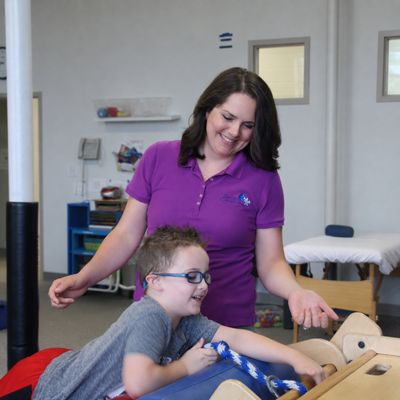
Children of all ages and a wide range of needs and diagnoses, including autism spectrum disorder, ADD and ADHD, sensory processing disorder, cerebral palsy, dyspraxia, developmental coordination disorder (DCD), Down syndrome, spina bifida, anxiety, learning disabilities and behavioral challenges.
What we treat
Commonly requested
Our therapists are trained and certified in a wide range of treatment approaches. These are some of the most requested. If you’re looking for something specific, just ask!
Therapeutic Listening® and Integrated Listening Systems are sound-based interventions used to support the development of a variety of skills.

Evidence-based programs, including Size Matters and Handwriting Without Tears, build fine-motor and visual-motor skills through writing practice.

From grooming and dressing to hygiene and toileting, we help children master the self-care skills that build independence in daily life.

A protocol that engages the vestibular, visual and auditory systems to support sensory development, body awareness and self-regulation.
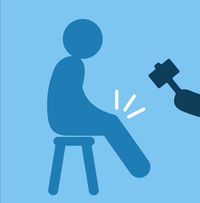
Masgutova Neurosensorimotor Reflex Integration uses movement patterns to integrate active primitive reflexes and support continued skill development.

A therapeutic approach for babies that can help with torticollis, plagiocephaly and head molding, postural preferences, and fussy or unsettled infants.
Common areas of focus
Handwriting is a complex skill. It asks the eyes, arms, hands and posture to work together, and relies on visual-motor and fine-motor skills for letter formation, sizing and accuracy.
Therapist-guided exercises and activities, like body-weight movements, resistance bands and light weights, build muscular strength and endurance.
The vestibular system is the inner-ear sense of balance and movement. When it isn’t working smoothly with the eyes, ears and body, children can struggle with balance, attention and everyday activities.
Heavy work, like pushing, pulling, hanging or carrying something heavy, gives the body calming input to muscles and joints. It can support regulation, attention, sensory processing and body awareness.
One team, four specialties
Many children benefit from more than one kind of therapy. Our team coordinates care.
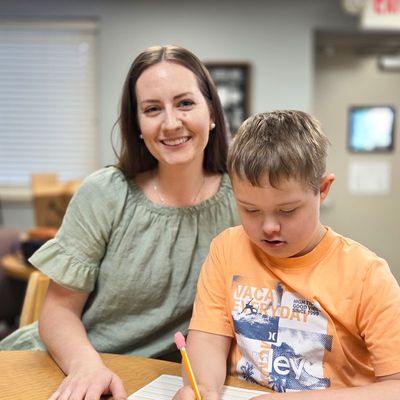
Finding words, being understood and connecting with friends and family, from late talkers to stuttering, social skills and reading readiness.
Explore Speech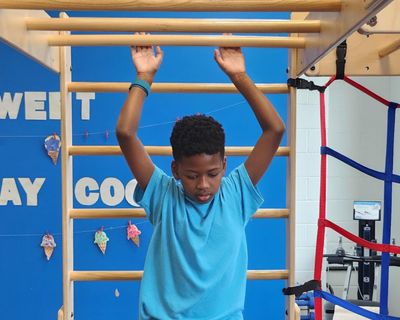
Strength, balance and coordination for running, climbing, biking and keeping up with friends at home, at school and on the playground.
Explore PT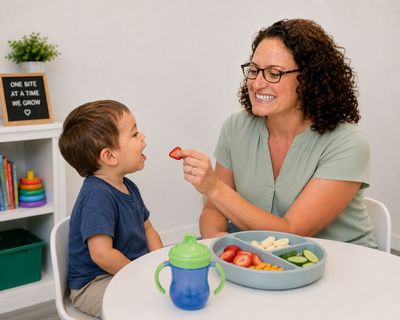
Gentle, individualized support for picky eating, food refusal, mealtime stress and safe swallowing, so mealtimes can feel good again.
Explore Feeding
We’re here to help
Whether you have a specific concern or simply a feeling that something isn’t quite right, we’re here to listen. Give us a call. We’ll talk through what you’re noticing and help you find the right place to start.